
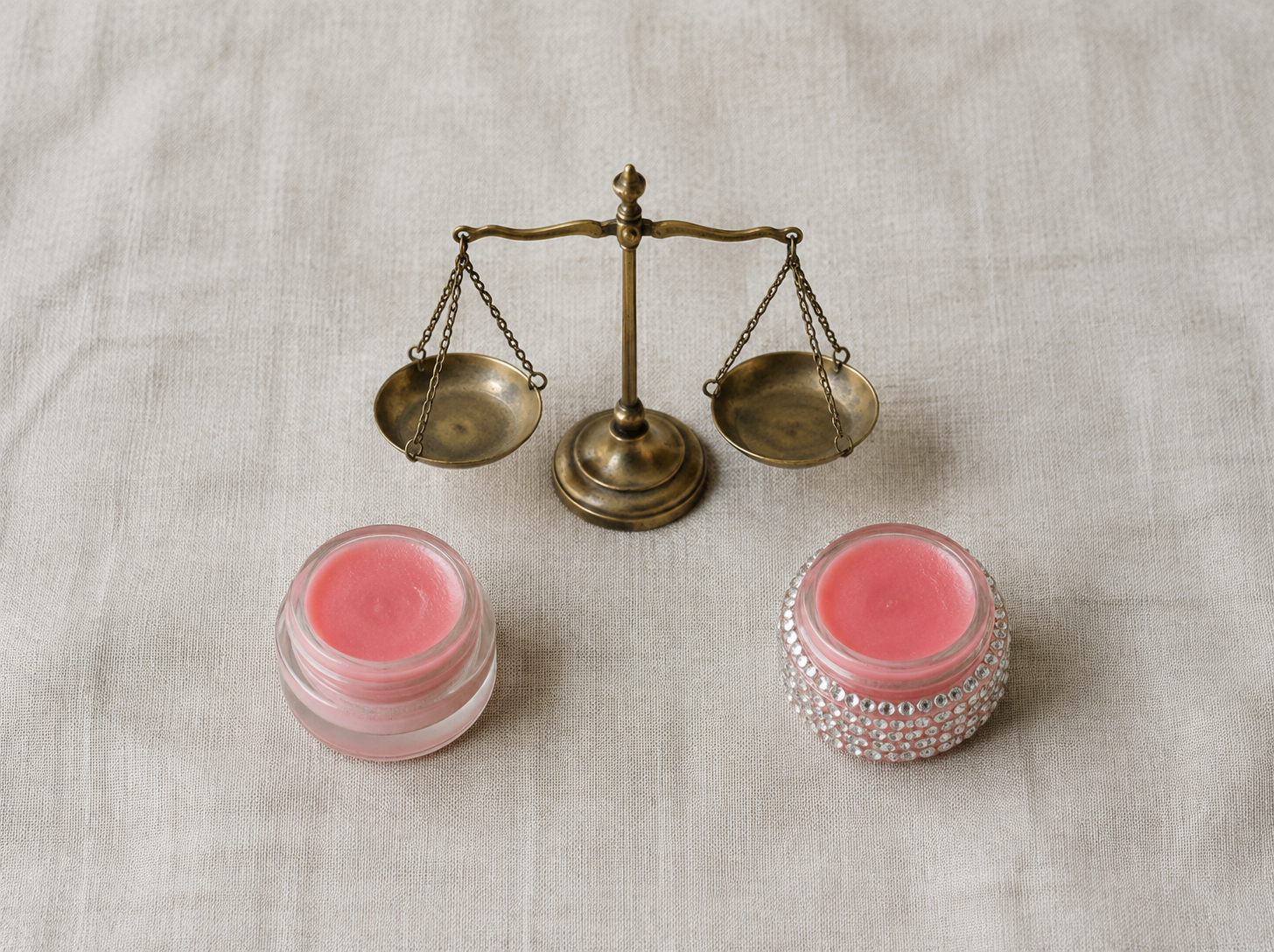
A $150 lip balm. Covered in Swarovski crystals. And the internet? It’s laughing. Loudly, honestly and pretty mercilessly. What looks like a small celebrity blunder is actually a sign of something much bigger: we consumers no longer buy blindly. We read ingredient lists, we compare, and big names don’t impress us as easily anymore.
The backlash over “Beso Bling”
In November 2026, Jennifer Lopez and her brand JLo Beauty teamed up with Swarovski to release a limited edition of her lip balm: “Beso Bling”. Three versions, each said to be inspired by a chapter of her career, each studded with crystals. The price: $150 per jar, or $225 for the set of all three.
The reactions on TikTok, Instagram and X were clear. Users mocked it as “Carmex with rhinestones”, joked that the crystals looked like a preschool class had glued them on, and picked apart a promo video that many felt looked suspiciously AI-generated. Many found the contrast with JLo’s own image especially biting: if you sing about how grounded you’ve stayed, it’s hard to credibly sell a lip balm that costs as much as a week’s groceries.
$19 or $150: What are you actually paying for?
The original Beso Balm launched in 2023 for $19. The Bling version costs almost eight times as much. The brand does describe it as an upgraded formula, but the visible difference is mainly the packaging.
| Beso Balm (2023) | Beso Bling (2026) | |
|---|---|---|
| Price | $19 | $150 each, $225 for the set of 3 |
| Packaging | Standard jar | Collectible jar with Swarovski crystals |
| Application | Jar, applied with your finger | Jar, applied with your finger |
That is exactly where the criticism comes in. An industry advisor told the trade magazine Beauty Independent, in essence, that for $150 she would expect results only a cosmetic procedure could deliver. A lip balm is an everyday product. It nourishes, it protects and it lives in your handbag. No crystal in the world makes it work better.
The real lesson: The price of a beauty product often says more about marketing, packaging and the brand name than about what your skin gets out of it.
Unboxing as a reality check: luxury advent calendars
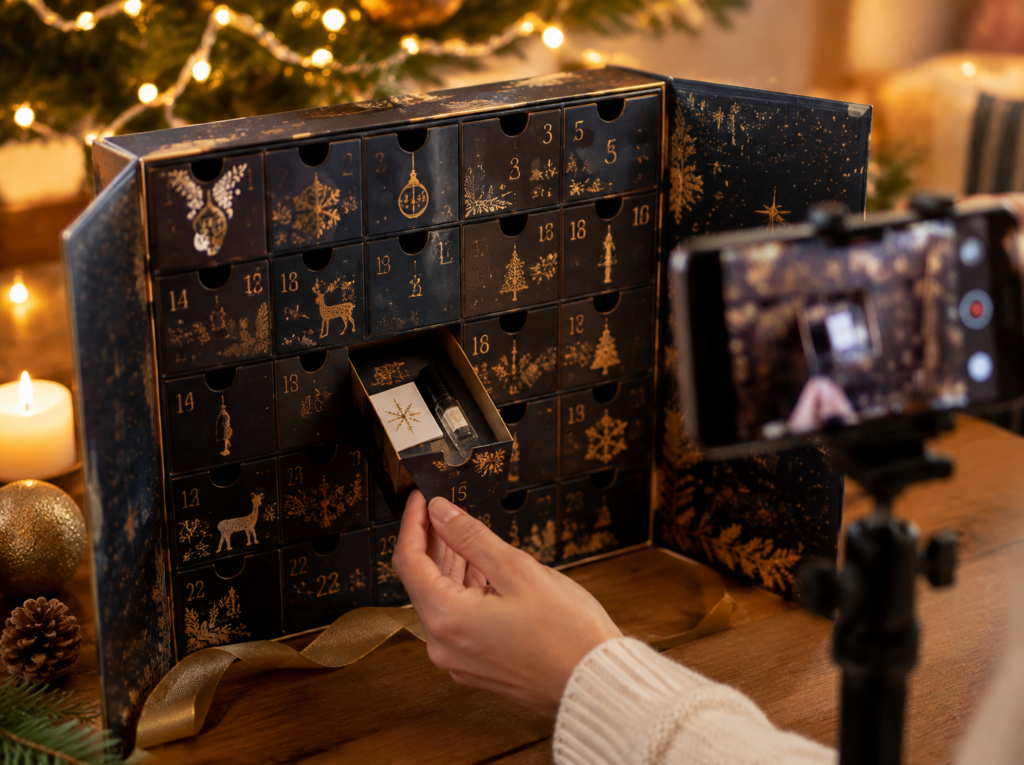
JLo is not an isolated case. For a few years now, TikTok and YouTube have had an entire genre of their own: the advent calendar unboxing. And luxury brands regularly come off badly.
| Year | Brand | Price | What sparked the criticism |
|---|---|---|---|
| 2026 | Skims | $148 | Contents felt too thin; Skims reportedly offered refunds |
| 2025 | Dior | around $750 to $1,000 (depending on market) | Makeup artist Sean Anthony showed many minis that felt like free samples |
| 2022 | Dior | $3,500 | One door held nothing but the lid for a candle from an earlier door |
| 2021 | Chanel | $825 | Stickers, dust bags and trinkets; Chanel then set its TikTok account to private |
The Chanel case from 2021 is still seen as a turning point. An influencer opened the calendar on camera, and millions of people watched live what was behind each door. The media called it a PR disaster. A year later, users simply commented on the Dior calendar with “Chanel advent 2.0”.
And in 2025 Dior went one step further: alongside its regular calendar, it offered a luxury trunk limited to 120 pieces for $8,200, which also ended up in unboxing videos.
The pattern is always the same. Beautiful packaging used to hide the contents. Today, a single phone camera reveals everything. Anyone who promises value now has to prove it in front of an audience.
The new consumer: ingredients over names
It is no coincidence that the internet reacts so quickly and so loudly. We as consumers have changed. Market researchers such as Mintel observe that researching ingredients has long since gone mainstream: people check formulations closely before they buy. According to Mintel, this is especially true in the luxury segment.
At the same time, so-called dupes are booming: cheaper alternatives with a similar formula. The market research company NIQ speaks of a “dupe culture” in which performance counts for more than a prestigious label. According to one widely cited industry figure, 56 percent of US consumers now prefer dupes.
So what exactly has changed?
- Knowledge is freely available. INCI lists, ingredient-scanning apps and dermatologists on social media explain what a product can really do.
- Real people instead of glossy ads. An honest unboxing video often reaches more people than any campaign.
- Money is tighter and spent more consciously. Before buying, many people ask themselves: what am I actually getting for my money?
- Trust has to be earned. A famous name is no longer proof of quality. If anything, it’s a reason to look more closely.
Luxury is no longer untouchable
For decades, the beauty industry ran on one simple rule: expensive means good. A logo on the jar, a star in the ad, elegant packaging, and the price was allowed to climb. That equation no longer adds up.
The JLo lip balm and the luxury advent calendars show the same thing: as soon as the contents don’t live up to the name and the price, it goes public. And it stays public. Comments, duets and reaction videos spread faster than any PR department can respond.
That doesn’t mean luxury is disappearing. There are still people who happily pay for a special experience, a beautiful ritual or an exceptional formula. But luxury now has to justify itself. Quality no longer shows in the price, but in what a product should really be about: what’s inside. A name alone is no longer enough.
And honestly? That’s good news. For all of us, and above all for our skin.
What this means for your skin
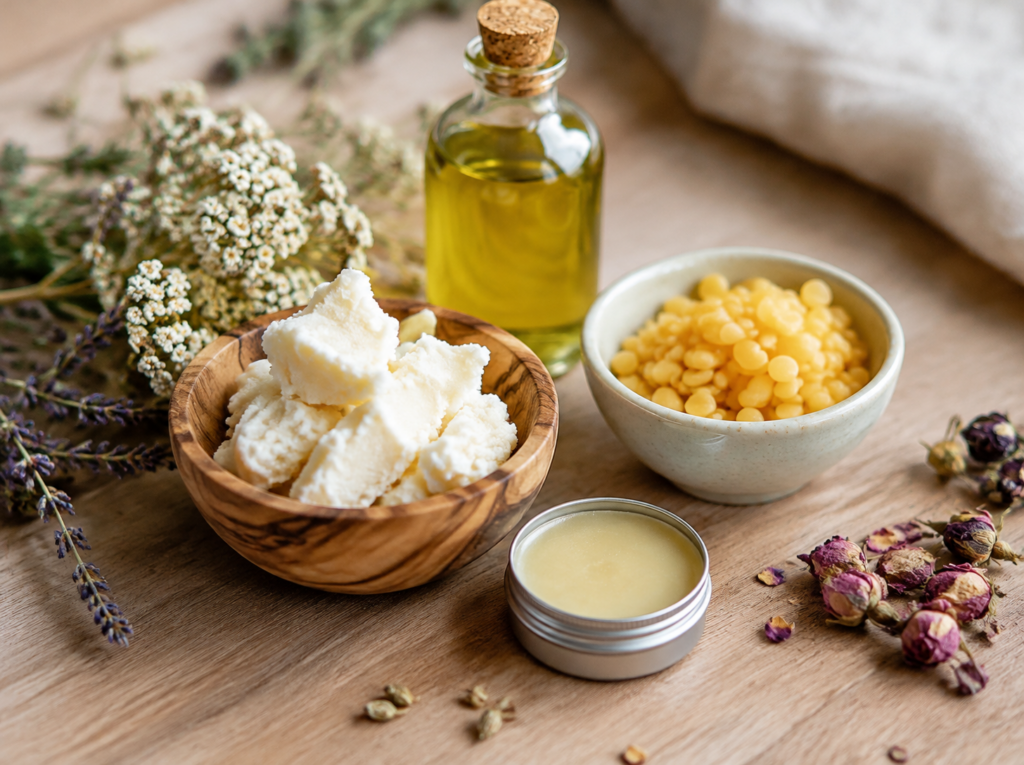
Your skin doesn’t recognize logos. It responds to ingredients, to concentrations and to whether a product suits it. A lip balm with shea butter, plant oils or beeswax from the drugstore can nourish just as well as a designer product.
That’s why conscious beauty shopping is also a form of self-care. You choose what’s good for you, not what a campaign wants to talk you into.
Your checklist before your next purchase
- Read the ingredients: What’s at the top of the INCI list? That’s where the ingredients with the highest share are listed.
- Compare the price per gram or milliliter: Minis and collector’s editions often seem cheaper or more valuable than they really are.
- Separate the packaging from the product: Am I paying for the care or for the jar?
- Look for independent voices: Honest reviews and unboxings show what’s really inside.
- Check for dupes: Is there an alternative with a similar formula at a fraction of the price?
- Listen to your gut: Do I really need this, or do I just want to buy the feeling the ad promises?
Conclusion: we’re not just laughing, we’re learning
The internet is laughing at JLo’s $150 lip balm and at advent calendars full of candle lids and samples. But behind the mockery lies a serious message to the industry: we’ve woken up. We read, we compare, and we no longer let ourselves be sold just anything.
The beauty industry will have to get used to the fact that trust no longer comes with the logo. It’s built through transparency, fair prices and products that keep their promises. And you? You’re allowed to treat yourself. But you’re also always allowed to ask: what’s really inside?
What do you think? Have you ever bought a luxury product that disappointed you, or an affordable one that surprised you? Tell me in the comments.
Sources
- Inc.: Jennifer Lopez Turned a $19 Lip Balm Into a $150 Luxury Product
- Beauty Independent: JLo Beauty’s $150 Lip Balm And Skims’ $148 Advent Calendar
- Bored Panda: Dior’s $1,000 Advent Calendar
- Cosmetics Business: Dior’s $3,500 advent calendar
- NBC News: Chanel’s $825 Advent calendar on TikTok
- Beautyworld Dubai / Mintel: Beauty moves from promises to proof
- NIQ: 2026 Beauty Trends to Watch
Leave a Reply