

“Your skin is a mirror of your gut.” You read this sentence on social media all the time, usually right before a product link. It sounds catchy, but it’s greatly simplified. Still, there’s a fascinating field of research behind it.
Here you’ll find out what’s well supported by science so far, where much is still unclear, and what you can do without spending a lot of money.
What is the gut-skin axis?
The gut-skin axis refers to the interactions between your gut, the microbiome that lives there (trillions of bacteria and other microorganisms) and your skin. The connection runs along several pathways:
- Immune system: A large part of the immune system is located in the gut. Inflammation there can affect the whole body.
- Metabolic products: Gut bacteria produce, for example, short-chain fatty acids from fiber, which may help regulate inflammation.
- Gut barrier: According to some hypotheses, if it becomes more permeable, more substances can enter the bloodstream and promote inflammation.
- Nervous system and stress: The gut and the brain communicate closely, and stress has been shown to change digestion and the microbiome.
What research shows so far (and what it doesn’t)
An honest assessment matters: much of it comes from observational studies that show associations but don’t prove cause and effect. People with acne or eczema sometimes have a different gut microbiome, but no one knows for sure whether that’s the cause or the consequence.
Diet and acne: There are indications that a diet with a high glycemic load (lots of sugar, white flour) may encourage breakouts in some people. There are observations for dairy products, too, but the data is inconsistent. So no one has to cut them out across the board.
Probiotics: Some studies suggest that certain probiotics may have a supportive effect on acne or atopic dermatitis. The results depend heavily on the bacterial strain and aren’t proven for all supplements. It’s not a miracle cure.
Mediterranean diet: A plant-focused diet with lots of vegetables, fiber, legumes, olive oil and fish is generally considered anti-inflammatory and good for the gut. Whether it improves your skin is individual.
Where marketing exaggerates
- “Gut detox, clear skin in 7 days” has no solid scientific basis.
- Expensive supplements don’t replace a balanced diet.
- Strict elimination diets on your own can lead to nutrient deficiencies and create stress around food. That’s good neither for your skin nor for your nervous system.
What you can do in practice
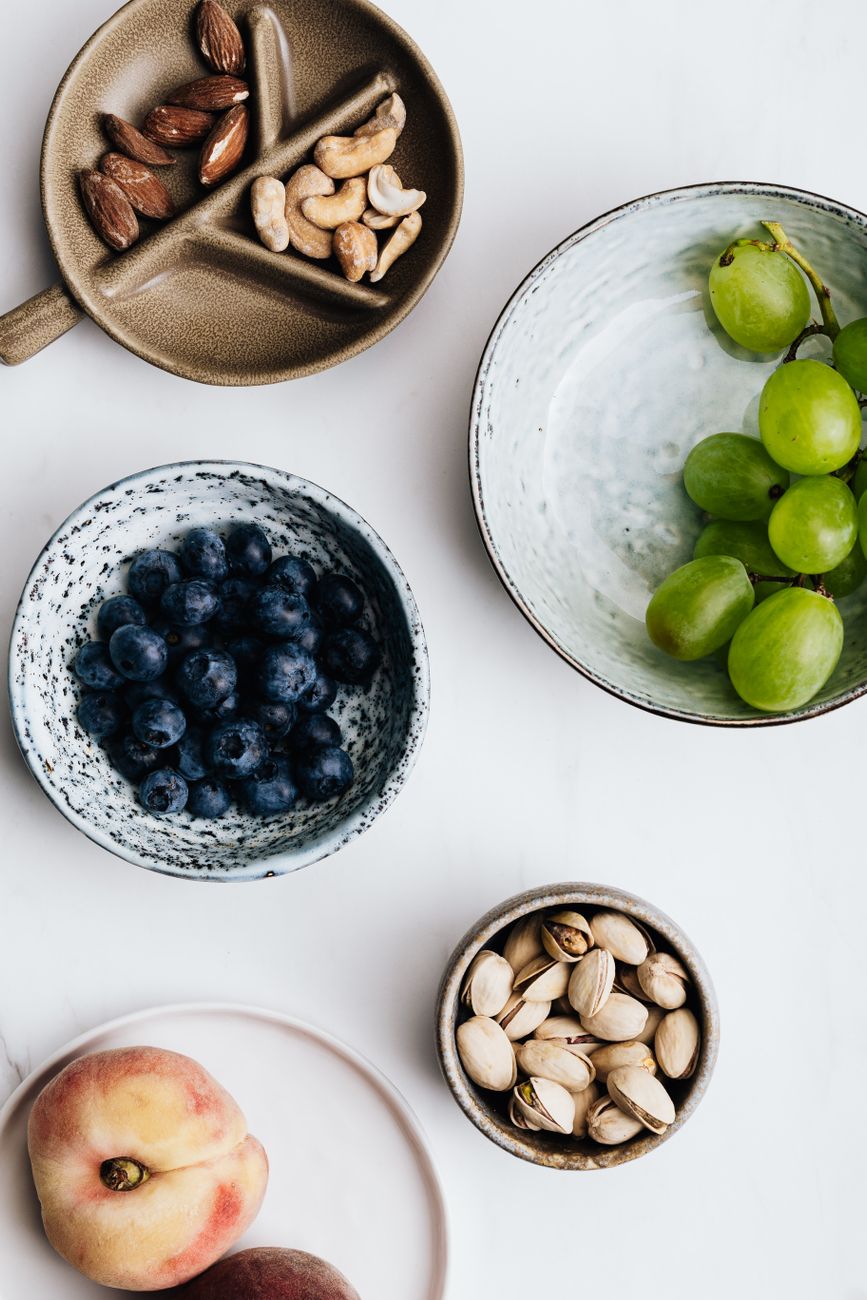
- More fiber: Vegetables, legumes, whole grains, oats and berries feed your beneficial gut bacteria.
- Try fermented foods: Yogurt, kefir, sauerkraut or kimchi can support the microbiome. Start slowly if your gut is sensitive.
- Don’t demonize sugar and highly processed foods, but observe: A food and skin diary over 4 to 6 weeks reveals patterns better than quick bans.
- Take sleep and stress seriously: Both affect your gut and your skin equally (more on this in our article on cortisol and the skin barrier).
- Be patient: Skin renews itself in about a month, so changes show up after several weeks at the earliest.
When to seek medical advice
If you have persistent acne, very itchy eczema, digestive problems or suspect a food intolerance, talk to a dermatologist, your doctor or a nutrition professional. With eczema and acne in particular, hormones, genetics and skincare can also play a role.
Conclusion
The gut-skin axis is real and fascinating, but it’s not a simple equation of “heal your gut, and your skin will clear up”. A high-fiber, varied diet is good for your gut and certainly won’t harm your skin. Everything else is fine-tuning that you can approach together with professionals.
Stress affects your gut and your skin equally. Our products offer you a gentle way to wind down better in the evening.
How to support your gut flora in practice with delicious recipes is something you can read in “The 5 Best Recipes for a Healthy Gut Flora” on Heal your Body.
Leave a Reply