
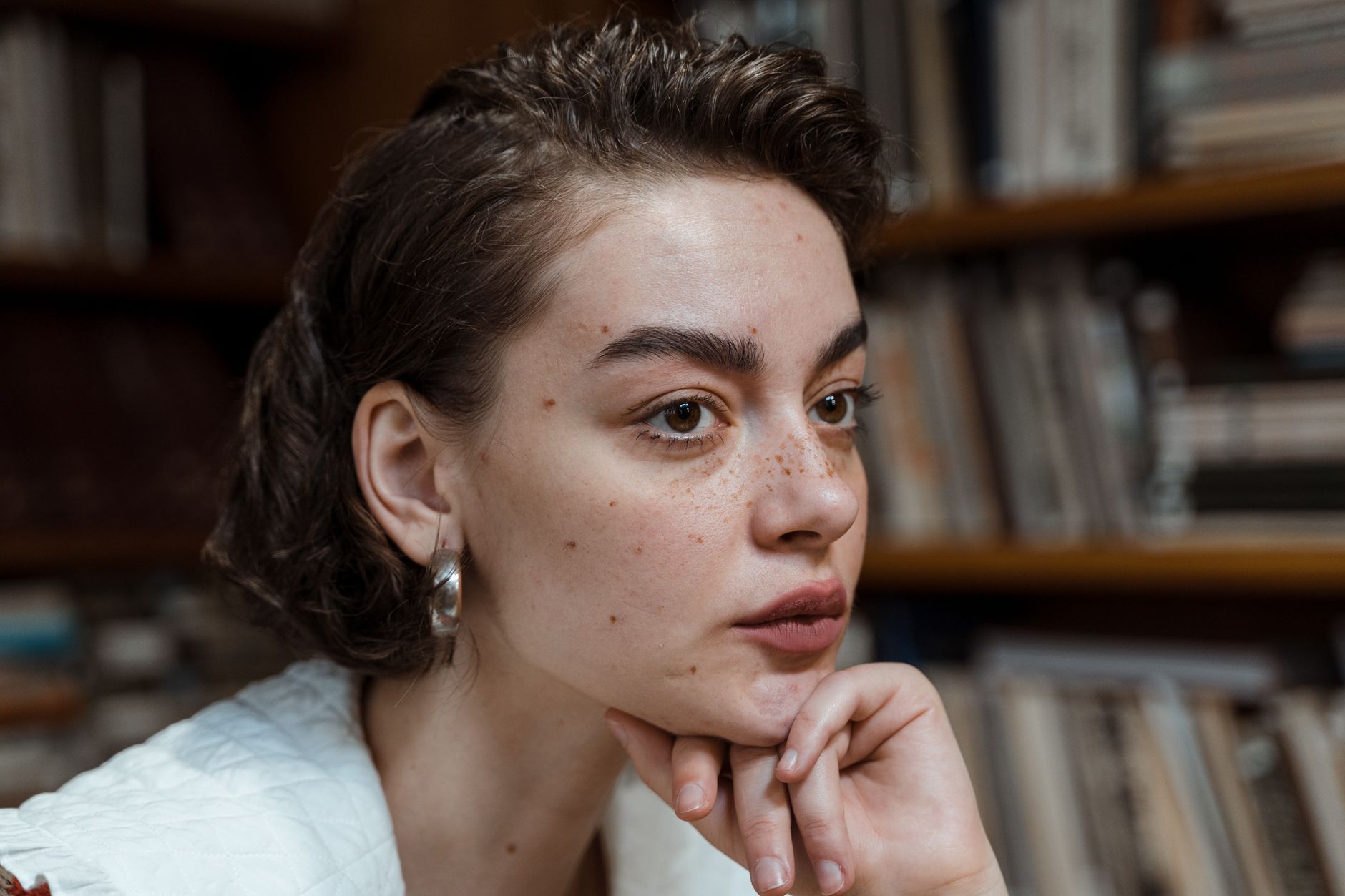
If you notice that your skin changes regularly over the course of your cycle (sometimes clearer, sometimes more breakout-prone, sometimes more sensitive), you’re not imagining it.
Your skin reacts directly to the hormonal fluctuations that happen in your body every month. Understanding what happens in each phase of your cycle helps you deal with these changes more calmly, and tailor your skincare more precisely.
The four phases of your cycle, and what they do to your skin
Menstrual phase (days 1–5): At the start of your period, both estrogen and progesterone are at their lowest. This drop in hormones can temporarily weaken your skin barrier, making your skin look more sensitive, irritated and dry. Many women also report a paler, more tired complexion during this phase, an effect that has more to do with overall energy levels than with hormones directly.
Follicular phase (around days 6–13): After your period, estrogen levels start rising steadily. Estrogen supports collagen production, improves moisture retention and gives you a firmer, often more radiant complexion. In this phase, skin usually looks clearer, more elastic and less oily, and many people experience it as the “good skin phase” of the month.
Ovulation phase (around day 14): Around ovulation, estrogen reaches its peak shortly before dropping abruptly. Luteinizing hormone (LH) also rises sharply for a short time. On these days, many women see their skin at its “best” of the whole month: plumper, more radiant, with visibly finer pores. Some, however, notice the first slight signs of change right after ovulation, as the drop in estrogen is already beginning.
Luteal phase (around days 15–28): Here the hormonal balance shifts noticeably: progesterone rises, and androgens (male hormones that are also present in the female body) gain relative influence. Androgens stimulate the sebaceous glands to produce more sebum. That’s the main reason many women are more prone to breakouts in the second half of their cycle, especially in the week before their period, often on the lower face (chin, jawline). Toward the end of this phase, both estrogen and progesterone drop sharply again, and the cycle starts over.
Why “just more products” isn’t the answer here
A common reflex with cycle acne is to treat it more aggressively during the symptomatic week: more exfoliation, stronger active ingredients, more products.
The problem: in exactly this phase, your skin barrier is already compromised. More aggressive skincare can make irritation worse rather than better.
It makes more sense to adapt your skincare routine to each phase of your cycle: soothing and barrier-protecting in the luteal phase, rather than adding even more irritation.
The underestimated factor: stress makes cycle acne worse
What many people don’t know: cortisol and the sex hormones interact directly.
Chronic stress can throw your hormonal balance off even further and intensify premenstrual skin problems. That explains why cycle acne is often much more pronounced during stressful phases of life than in calmer ones: the hormonal component and the nervous system component reinforce each other.

What you can actually do
Besides adapting your skincare, it’s worth addressing the PMS symptoms themselves instead of only treating the skin symptoms.
If you notice that the week before your period is regularly stressful both emotionally and physically (including your skin), it can help to work specifically on regulating this phase, instead of just reacting anew every month.
That’s exactly why we created our EFT Tapping Guide for PMS: a program that specifically addresses the emotional and physical ups and downs of the luteal phase and helps you get through these days more calmly, often with noticeable effects on irritability, sleep and your skin, too.
Part of the Circle with Heal your Mind: Cycle fluctuations are just one form of physical chronic stress that many mothers barely recognize as such. On Heal your Mind, articles like “Mental Load in Motherhood: The Invisible Weight No One Talks About” show you what happens in your nervous system when stress becomes a permanent state.
Leave a Reply