
A cream that doesn’t just care for your skin, but makes you happy. A serum that “switches off stress signals in the skin”. A face oil with an “endorphin effect”. If you walk through a beauty department in 2026, you’ll come across promises like these more and more often. The buzzword behind them: neurocosmetics.
The idea sounds tempting, especially if you’re under constant stress anyway. But how much of it is science, and how much is clever marketing? The honest answer, as so often, lies somewhere in between.
What are neurocosmetics?
Neurocosmetics isn’t a protected term. It roughly describes two directions:
- Products that target the skin’s nerve endings and messenger substances. For example, to calm burning, itching or sensitivity.
- Products that are meant to work through the senses. Through scent, texture and the ritual of applying them, they’re supposed to trigger well-being and thereby lower stress indirectly.
In marketing, the two levels often blur. That’s exactly where a closer look pays off.
What’s well supported by science: skin and the nervous system are closely connected
Skin is much more than a shell. It’s densely packed with nerve endings, produces its own messenger substances and reacts to stress hormones. That’s why researchers also describe it as a neuroendocrine organ, meaning an organ in constant exchange with the nervous and hormonal systems.
That explains why stress shows up on your face so quickly. As I described in the article Why Stressed Skin Heals More Slowly: The Link Between Cortisol and Your Skin Barrier, persistently elevated cortisol levels can weaken the skin barrier and promote inflammation. In people with eczema, rosacea or psoriasis, it’s well known that stress can trigger or worsen flare-ups.
The connection runs both ways: stress affects the skin, and skin problems weigh on the mind. If you struggle with acne or eczema, you know the cycle of shame, tension and the next breakout.
What’s partly supported: soothing ingredients for sensitive skin
There are ingredients designed specifically to dampen the skin’s irritation signals, mainly in skincare for sensitive or itch-prone skin. Here, the “neuro” approach actually makes sense, because burning and itching are nerve signals.
However, much of the evidence comes from lab studies or small manufacturer studies. Whether a product will noticeably help you can only be inferred from them to a limited extent.
What’s more likely marketing: the cream against a bad mood
It gets tricky with promises like “lifts your mood” or “releases happy hormones”. That an ingredient applied to your cheek measurably changes your mood has hardly been proven scientifically. Such claims are often based on surveys in which testers say they “felt more relaxed” after using the product. That isn’t worthless, but it says more about the ritual than about the ingredient.
And that’s exactly where the real core lies.
The underestimated part: the ritual
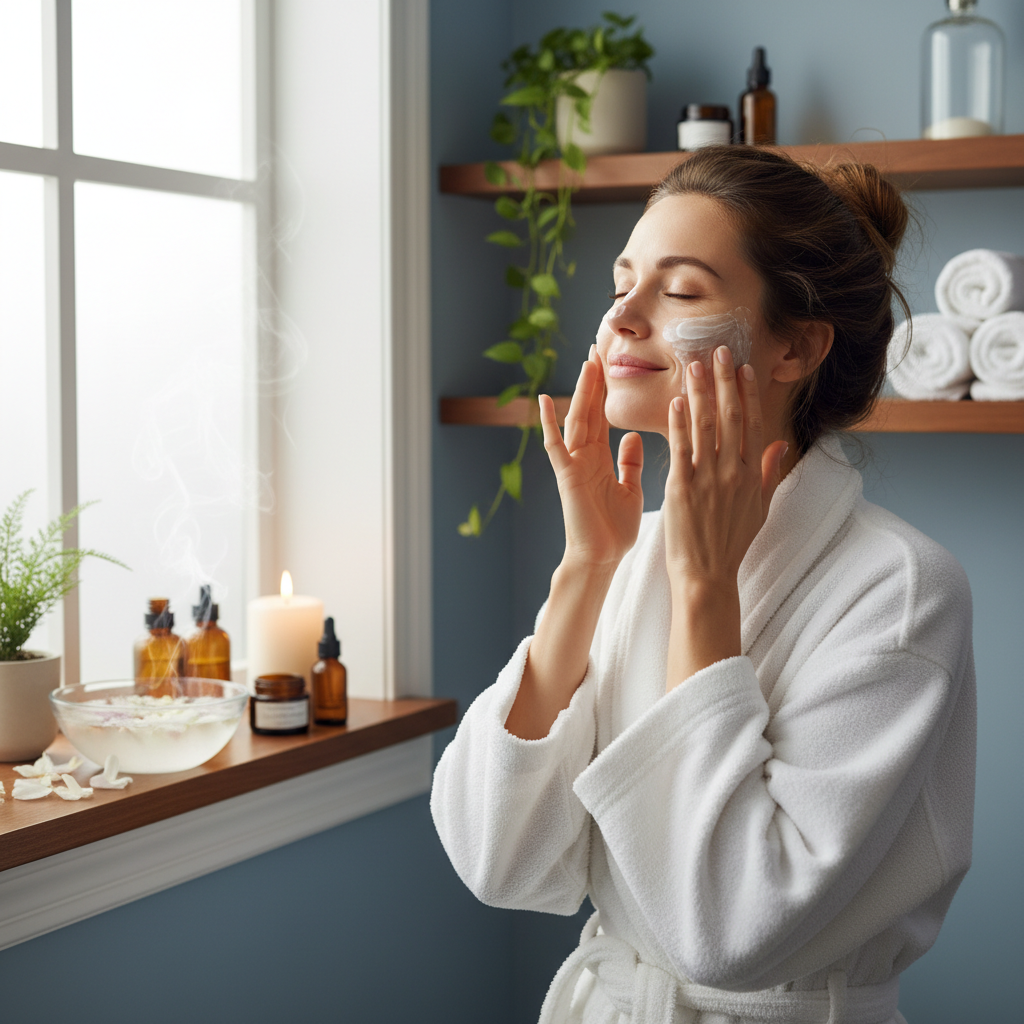
What really works about neurocosmetics is often not the product, but the way you use it. Slow touch, a pleasant scent, a few quiet minutes just for you: all of this can signal safety to your nervous system.
- Touch: Gentle, slow stroking movements are picked up by special nerve fibers in the skin that are linked to pleasant, calming sensations.
- Scent: Smells reach the brain areas responsible for emotions very directly. A scent you associate with calm can help you wind down faster.
- Repetition: An evening ritual that’s always the same becomes a signal for your body: the day is over now.
The beautiful thing: you don’t need an expensive specialty product for this. Your completely normal skincare can have this effect if you use it mindfully.
How to use the skin-nerve connection in everyday life
- Slow down your routine. Instead of rubbing cream in quickly, massage it in with slow, circular movements. Exhale deeply three times before you start.
- Choose a scent deliberately. If your skin tolerates fragrance, a product with a scent you find calming can anchor your evening ritual. If you have sensitive skin, use a room fragrance instead of scented skincare.
- A facial massage as a break. Two minutes of gentle massage along your jaw and temples release tension that many people unconsciously hold there.
- Don’t just treat skin problems on the surface. If your skin regularly reacts during stressful phases, it’s worth addressing the stress itself, not just the skin.
How to recognize serious neurocosmetics
Before you spend money on a “mood serum”, these questions help:
- What exactly does the product promise: skincare, calming irritation or improving your mood?
- Are there studies, and if so, on people or only in the lab? How many participants?
- Is the study independent or done by the manufacturer itself?
- Wouldn’t the same ritual with your current cream have the same effect?
So neurocosmetics are neither a miracle cure nor pure deception. The true core, that skin and the nervous system are closely connected, is well supported. But you’ll get the greatest benefit not from a new product, but from the way you treat your skin and yourself every day.
If your skin keeps showing you that your stress level is too high, start where it begins: with your nervous system. My workbook “7-Day Nervous System Reset” guides you back to more calm with short exercises and reflection questions, inside and out.
And if you’re looking for products that support your skin barrier, you’ll find a selection of skincare products everyone is talking about on the homepage.
Part of the Circle: Which scents can demonstrably calm the nervous system, and why smudging and aromatherapy aren’t the same thing, is something you can read on Heal your Home: Smudging, Sage & Co.: What Actually Helps.
Leave a Reply